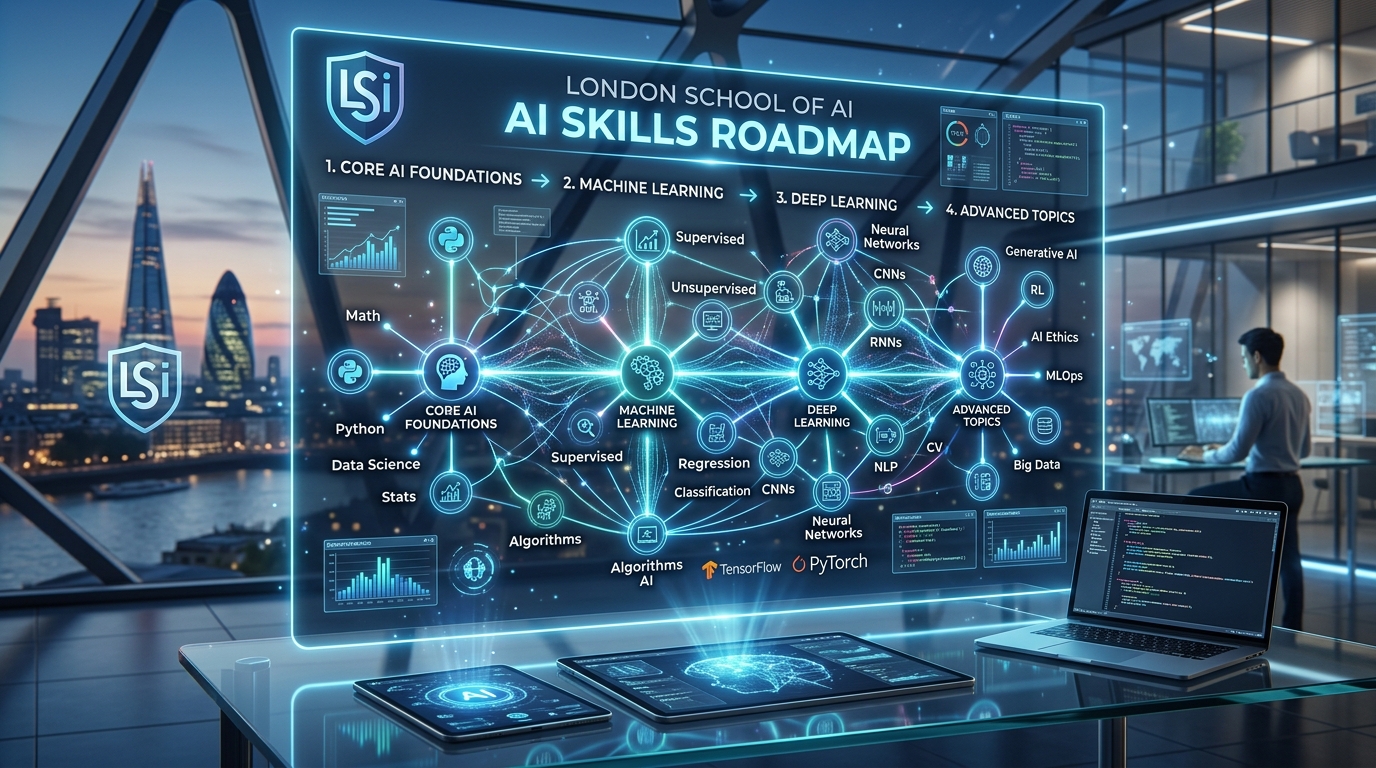
The Rapid Transformation of the AI Job Market
As artificial intelligence shifts from experimental lab prototypes into core enterprise infrastructure, the demand for certified, practical practitioners has skyrocketed. In 2026, companies are no longer seeking generic prompt enthusiasts; they are actively recruiting professionals who understand architectural integration, evaluation metrics, and responsible deployment.
1. Advanced Prompt Architecture & Context Engineering
Modern prompting has moved far beyond simple zero-shot queries. High-performing AI workflows rely on structured multi-step reasoning, few-shot dynamic examples, and chain-of-thought verification frameworks.
- Chain-of-Thought (CoT): Guiding reasoning models through intermediate verification steps.
- Structured Output Extraction: Enforcing strict JSON schema responses for deterministic pipeline integration.
- System Persona Alignment: Calibrating tone, safety boundaries, and domain boundaries.
2. Autonomous Multi-Agent Systems
Autonomous agents equipped with tool-calling capabilities (web search, code execution, SQL generation) are automating complex cognitive tasks. Understanding agent loops, state management, and memory storage is now an essential engineering skill.
3. Retrieval-Augmented Generation (RAG)
Connecting LLMs to corporate knowledge graphs and vector databases remains the golden standard for enterprise search and support automation without catastrophic hallucinations.
"The competitive advantage in 2026 belongs to those who combine domain expertise with practical AI execution."
Key Action Steps for Learners
To future-proof your career, focus on building verifiable portfolio projects, earning recognized industry credentials, and staying engaged with the global AI development community.